From Founder Fatigue to Freedom: How VibeCoding and Lovable.dev Are Revolutionizing Small Business Automation
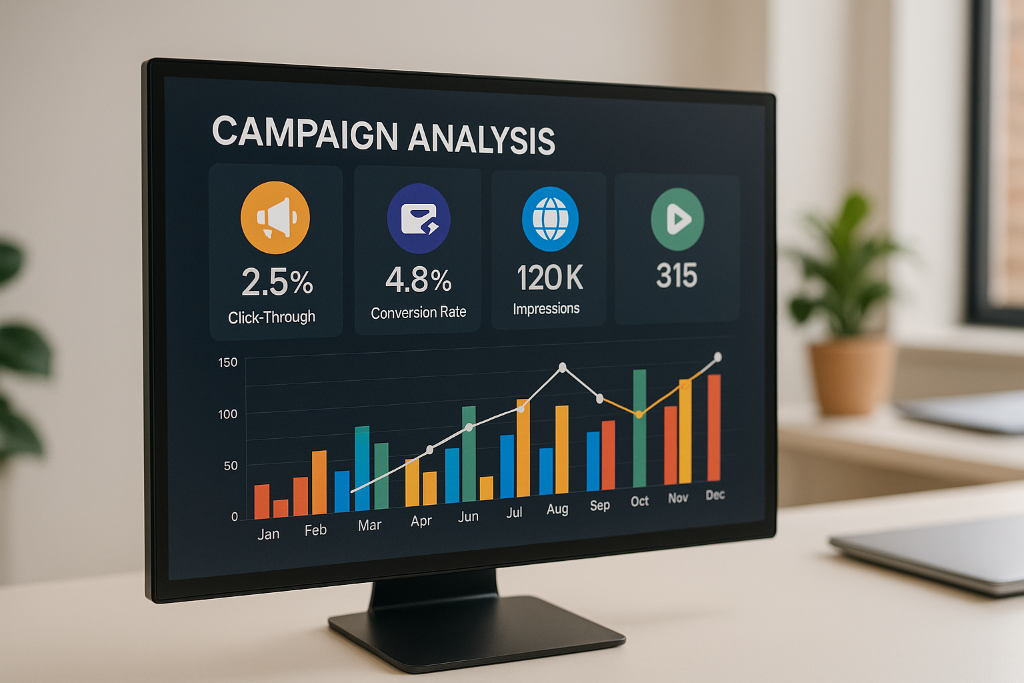
You started your business with a vision. Maybe it was a digital agency that would revolutionize how local businesses connect with customers. Perhaps it was a tech service company that would streamline operations for other entrepreneurs. Or maybe it was a vertical SaaS solution that would solve a problem you experienced firsthand in your industry. But somewhere between the late nights, the endless spreadsheets, and the constant firefighting, that vision got buried under the weight of manual processes, disconnected systems, and the relentless grind of trying to scale a business while still being personally involved in every decision. If you're reading this as a founder of a 2M−2M- 2M− 10M business with 10-50 employees, you know exactly what I'm talking about. You're execution-fatigued. You're drowning in the operational details that should be automated but somehow never get prioritized. And you're starting to think about your exit strategy, wondering how you'll ever make your business attractive to buyers when so much of it depends on you personally. Here's the truth that most business advisors won't tell you: the gap between where you are now and where you need to be for a successful exit isn't just about revenue growth or market positioning. It's about systems. It's about processes. It's about building a business that can run without you. And thanks to a revolutionary approach called VibeCoding and platforms like Lovable.dev, that transformation is now within reach for every small business founder—without requiring a technical team, massive capital investment, or years of development time. The Hidden Cost of Manual Processes in Growing Businesses Before we dive into the solution, let's acknowledge the problem that's keeping you up at night. Your business has grown beyond the startup phase, but it hasn't yet reached the level of operational sophistication that would make it truly scalable or sellable. You're caught in what I call the "founder's trap"—too big for simple solutions, too small for enterprise-level automation. Consider Sarah, a founder I worked with recently who built a successful digital marketing agency. On paper, her business looked impressive: $4.2 million in annual revenue, 28 employees, and a client roster that included several Fortune 500 companies. But when we started preparing for her exit, the reality was sobering. Sarah was personally involved in every client proposal. Her team was using three different project management systems that didn't communicate with each other. Client reporting required manual data compilation from five different sources, taking her operations manager 12 hours every week. The sales pipeline existed primarily in Sarah's head and a collection of spreadsheets that only she could interpret. When potential buyers evaluated her business, they saw exactly what Sarah feared they would see: a company that was entirely dependent on its founder. The valuation reflected that dependency, coming in at 40% below what comparable agencies were selling for. This scenario plays out thousands of times every year across America. Founders who have built successful businesses discover that their lack of systematic automation has created a ceiling on their company's value and their own freedom. The traditional response to this problem has been to hire expensive consultants, invest in complex enterprise software, or build custom solutions that take months to implement and often fail to deliver the promised results. But there's a new approach that's changing everything: VibeCoding. Understanding VibeCoding: The Democratization of Business Automation VibeCoding represents a fundamental shift in how we think about building business solutions. Coined by AI researcher Andrej Karpathy, VibeCoding is the practice of creating software applications by describing what you want in plain English, rather than writing traditional code. Think about that for a moment. Instead of hiring developers, learning programming languages, or wrestling with complex software configurations, you simply tell an AI system what you need your business to do, and it creates the solution for you. This isn't science fiction. It's happening right now, and it's particularly powerful for small business founders who need custom solutions but don't have the resources for traditional software development. Here's how it works in practice: Let's say you need a system that automatically pulls data from your CRM, combines it with financial information from your accounting software, analyzes the results for trends, and sends you a weekly report with actionable insights. In the traditional world, this would require hiring a developer, spending weeks on requirements gathering, months on development, and ongoing maintenance costs. With VibeCoding, you describe exactly what you want in natural language, and the AI creates the entire system for you. No coding required. No technical team needed. No months of development time. The implications for small business founders are profound. For the first time, you have access to the same level of automation and custom software solutions that were previously available only to large enterprises with massive IT budgets. Lovable.dev: Where VibeCoding Meets Business Reality While VibeCoding as a concept is powerful, its practical application for business automation has been revolutionized by platforms like Lovable.dev. Lovable represents the evolution of VibeCoding from an interesting technical concept to a practical business tool that any founder can use to transform their operations. What makes Lovable.dev particularly relevant for small business founders is its focus on creating production-ready applications, not just prototypes or demos. When you describe a business process to Lovable, it doesn't just generate code—it creates a fully functional web application that you can immediately deploy and use in your business. The platform handles all the technical complexity that traditionally makes custom software development so challenging for small businesses. Database setup, user authentication, real-time updates, mobile responsiveness, security protocols—all of these are automatically handled based on your natural language description of what you need. But perhaps most importantly for founders thinking about their exit strategy, Lovable.dev creates applications that are built on standard, maintainable code. This means that the solutions you create aren't black boxes that only work as long as you're using the platform. They're real software applications that can be maintained, modified, and enhanced by any competent developer. This addresses one of the biggest concerns that potential buyers have when evaluating businesses that rely heavily on automation: vendor lock-in and technical debt. With Lovable.dev, you're building genuine assets that add value to your business rather than creating dependencies that could become liabilities. Real-World Applications: Transforming Common Business Challenges To understand the practical impact of VibeCoding and Lovable.dev for small business founders, let's explore some specific scenarios where these tools can create immediate value. Client Onboarding and Project Management One of the most common pain points for service-based businesses is the client onboarding process. It typically involves multiple touchpoints, various forms and documents, coordination between different team members, and a significant amount of manual follow-up. Using Lovable.dev, you can create a comprehensive client onboarding system by simply describing your ideal process. For example: "I need a system where new clients can upload their project requirements, our team can review and approve them, tasks are automatically assigned to the appropriate team members, and clients receive regular updates on progress. The system should integrate with our existing CRM and send automated reminders for any missing information." Within hours, not months, you have a fully functional system that eliminates the manual coordination that previously required your personal involvement. Your team can onboard new clients efficiently, clients have visibility into the process, and you have data on where bottlenecks occur so you can continuously improve. Financial Reporting and Business Intelligence Another area where small businesses typically struggle is in creating meaningful financial reports and business intelligence. Most founders are drowning in data but starving for insights. They have information scattered across multiple systems—CRM, accounting software, project management tools, marketing platforms—but no easy way to see the big picture. With VibeCoding through Lovable.dev, you can create a unified dashboard that automatically pulls data from all your business systems and presents it in a format that actually helps you make decisions. You might describe it like this: "I need a dashboard that shows me our monthly recurring revenue, customer acquisition cost, lifetime value, project profitability by client, team utilization rates, and cash flow projections. It should update automatically and alert me when any metric falls outside our target ranges." The result is a business intelligence system that would typically cost tens of thousands of dollars and take months to implement, created in a fraction of the time and cost. Sales Pipeline Automation For many small business founders, the sales process is still largely manual, relying on personal relationships and institutional knowledge that exists primarily in the founder's head. This creates a significant barrier to scaling and makes the business less attractive to potential buyers. VibeCoding allows you to systematize your sales process without losing the personal touch that makes it effective. You can create a system that tracks leads from initial contact through closing, automatically nurtures prospects with personalized communications, alerts team members when follow-up is needed, and provides analytics on what's working and what isn't. The key difference from traditional CRM systems is that you're not trying to fit your process into someone else's software. Instead, you're creating a system that perfectly matches how your business actually operates, while adding the automation and systematization that makes it scalable. The Strategic Advantage: Building Sellable Systems For founders who are thinking about their exit strategy, the strategic value of VibeCoding and Lovable.dev goes far beyond operational efficiency. These tools allow you to create what buyers are actually looking for: systematic, documented, transferable business processes. When potential buyers evaluate your business, they're not just looking at your revenue and growth trajectory. They're trying to understand how dependent the business is on you personally, how easily they can maintain and grow the business after acquisition, and what risks they're taking on. Businesses that rely heavily on manual processes, undocumented procedures, and founder knowledge are inherently risky for buyers. They require the buyer to either retain the founder (which limits their flexibility) or invest significant time and resources in systematizing the business after acquisition. By using VibeCoding to create systematic, automated processes, you're addressing these concerns proactively. You're demonstrating that your business can operate without your constant involvement, that your processes are documented and transferable, and that the new owner will have the tools they need to maintain and grow the business. Moreover, the applications you create using Lovable.dev become genuine business assets. They're custom software solutions that are specifically designed for your industry and business model. For the right buyer, these systems can be more valuable than your current revenue stream because they represent a competitive advantage that can be applied to other businesses or markets. Implementation Strategy: A Practical Roadmap for Founders Understanding the potential of VibeCoding and Lovable.dev is one thing; implementing it effectively in your business is another. Based on my experience working with dozens of small business founders, here's a practical roadmap for getting started. Phase 1: Process Audit and Prioritization Before you start building solutions, you need to understand exactly what processes in your business would benefit most from automation. This isn't about automating everything—it's about identifying the specific areas where automation will have the biggest impact on your business value and your personal freedom. Start by documenting every process that currently requires your personal involvement or creates bottlenecks for your team. For each process, ask yourself three questions: How much time does this consume? How critical is it to business operations? How difficult would it be for someone else to take over this process? The processes that score high on all three dimensions are your priority targets for VibeCoding automation. These are the areas where automation will create the most immediate value and have the biggest impact on making your business more sellable. Phase 2: Pilot Project Selection Rather than trying to automate everything at once, start with a single pilot project that will demonstrate the value of VibeCoding to your team and give you experience with the process. Choose something that's important enough to matter but not so critical that any disruption would harm your business. Client reporting is often an ideal pilot project for service-based businesses. It's time-consuming, requires coordination between multiple team members, and is something that clients notice and value. It's also relatively straightforward to automate and provides clear metrics for measuring success. For product-based businesses, inventory management or customer support ticket routing might be better pilot projects. The key is to choose something where you can clearly measure the before-and-after impact. Phase 3: Building Your First VibeCoding Solution When you're ready to build your first solution using Lovable.dev, start by writing a detailed description of your current process and your ideal future state. Be specific about what data needs to be collected, how it should be processed, who needs access to what information, and what actions should be triggered automatically. Don't worry about being too technical in your description. The power of VibeCoding is that you can describe business processes in business terms. Focus on what you want to accomplish, not how you think it should be implemented technically. For example, instead of saying "I need a database with customer information that integrates with our CRM API," say "I need a system where our sales team can see all customer interactions in one place, including emails, phone calls, and meeting notes, and where new information is automatically shared with our project management team." Phase 4: Testing and Refinement Once Lovable.dev has created your initial solution, spend time testing it thoroughly with your team. The beauty of VibeCoding is that modifications and improvements can be made quickly by simply describing what you want to change. This iterative approach is particularly valuable for small business founders because it allows you to refine your processes as you automate them. You might discover inefficiencies in your current process that you hadn't noticed before, or identify opportunities for improvement that weren't apparent until you saw the process systematized. Phase 5: Scaling and Integration After you've successfully implemented your pilot project, you can begin scaling the approach to other areas of your business. The key is to think systematically about how different processes connect to each other and how automation in one area can create efficiencies in others. For example, automating your client onboarding process might generate data that can be used to improve your sales forecasting. Systematizing your project management might reveal patterns that help you optimize your pricing strategy. The goal is to create an integrated system of automated processes that work together to make your business more efficient, more predictable, and more valuable to potential buyers. Overcoming Common Objections and Concerns Despite the clear benefits of VibeCoding and platforms like Lovable.dev, many small business founders have legitimate concerns about implementing these technologies. Let's address the most common objections and provide practical guidance for overcoming them. "I Don't Have Time to Learn New Technology" This is perhaps the most common objection, and it's understandable. As a founder, you're already stretched thin, and the idea of learning another new system can feel overwhelming. The reality is that VibeCoding is specifically designed to minimize the learning curve. You're not learning to code or mastering complex software. You're describing your business processes in plain English. If you can write an email explaining how your business works, you can use VibeCoding. Moreover, the time investment required to get started is minimal compared to the time savings you'll realize once your processes are automated. Most founders find that they recoup their initial time investment within the first month of implementation. "What If the AI Doesn't Understand My Business?" This concern reflects a misunderstanding of how modern VibeCoding platforms work. Lovable.dev and similar tools aren't trying to understand your entire business at once. They're focused on understanding specific processes that you describe to them. The key is to start with simple, well-defined processes and gradually work up to more complex ones. As you gain experience with the platform, you'll develop better skills at describing your processes in ways that the AI can understand and implement effectively. Additionally, the iterative nature of VibeCoding means that you can refine and improve your solutions over time. If the initial implementation doesn't perfectly match your needs, you can easily modify it by describing what you want to change. "I'm Concerned About Security and Data Privacy" Security is a legitimate concern for any business, and it's particularly important when you're dealing with customer data and proprietary business processes. The good news is that platforms like Lovable.dev are built with enterprise-level security standards. More importantly, VibeCoding solutions can be designed to meet your specific security requirements. You can specify exactly what data should be encrypted, who should have access to what information, and how sensitive information should be handled. In many cases, VibeCoding solutions are actually more secure than the manual processes they replace because they eliminate the human errors that often lead to security breaches. "What Happens If I Want to Stop Using the Platform?" This concern about vendor lock-in is particularly relevant for founders who are thinking about their exit strategy. The last thing you want is to build your business on a platform that could become a liability if you need to transition to new ownership. Lovable.dev addresses this concern by generating standard, maintainable code that can be exported and maintained independently of the platform. The applications you create aren't dependent on continued access to Lovable.dev—they're real software applications that can be hosted and maintained by any competent developer. This means that the automation you build becomes a genuine business asset rather than a dependency that could complicate a future sale. The Competitive Advantage: Why Early Adopters Win While VibeCoding and platforms like Lovable.dev are becoming more widely known, they're still in the early adoption phase for small businesses. This creates a significant opportunity for founders who implement these tools now to gain a competitive advantage that will be difficult for competitors to match. Consider the current landscape in your industry. How many of your competitors have systematic, automated processes for client onboarding, project management, financial reporting, and business intelligence? How many have custom software solutions that are specifically designed for their business model and industry? If you're like most small business founders, the answer is probably "very few" or "none." Most of your competitors are still relying on manual processes, generic software solutions, and founder knowledge to run their businesses. By implementing VibeCoding solutions, you're not just improving your operational efficiency—you're creating a sustainable competitive advantage. Your business becomes more responsive to customer needs, more efficient in its operations, and more attractive to both customers and potential buyers. Moreover, the network effects of automation mean that your competitive advantage compounds over time. As your automated systems generate more data, you gain better insights into your business and your market. As your processes become more efficient, you can reinvest the time and cost savings into further improvements and growth initiatives. Financial Impact: Quantifying the ROI of VibeCoding For founders who are focused on building sellable businesses, the financial impact of VibeCoding implementation extends far beyond operational cost savings. Let's examine the specific ways that VibeCoding can improve your business valuation and exit prospects. Operational Efficiency Gains The most immediate financial impact comes from operational efficiency improvements. When you automate manual processes, you're not just saving time—you're freeing up your team to focus on higher-value activities that directly contribute to revenue growth. Consider a typical scenario: Your operations manager currently spends 10 hours per week on manual reporting and data compilation. At a fully loaded cost of 75,000peryear,thatrepresents75,000 per year, that represents 75,000peryear,thatrepresents 14,400 in annual labor costs for activities that don't directly generate revenue. By automating these processes with VibeCoding, you eliminate this cost while simultaneously improving the quality and timeliness of your business intelligence. Your operations manager can now focus on analysis and strategic initiatives that actually drive business growth. Multiply this across multiple processes and team members, and the annual savings can easily reach six figures for a $5 million business. Revenue Growth Through Better Systems More importantly, systematic automation enables revenue growth that wouldn't be possible with manual processes. When your client onboarding is automated, you can handle more clients without proportionally increasing your overhead. When your sales process is systematized, you can scale your business development efforts more effectively. Many of the founders I work with see 20-30% revenue growth in the first year after implementing comprehensive VibeCoding solutions, not because they're working harder, but because their systems enable them to work more effectively. Valuation Multiple Improvement Perhaps the most significant financial impact comes from the improvement in your business valuation multiple. Businesses with systematic, automated processes typically sell for higher multiples than those that rely heavily on manual processes and founder involvement. The difference can be substantial. A $5 million business that relies heavily on founder knowledge and manual processes might sell for a 2.5x revenue multiple, while a similar business with systematic automation might command a 4x multiple or higher. This means that the investment in VibeCoding automation could potentially add $7.5 million or more to your exit value—a return on investment that's difficult to achieve through any other business improvement initiative. Risk Reduction and Deal Certainty Finally, VibeCoding solutions reduce the risk profile of your business from a buyer's perspective, which translates to better deal terms and higher deal certainty. Buyers are more confident in businesses with systematic processes, which means they're more likely to close at the agreed-upon valuation and less likely to demand significant price reductions during due diligence. Building Your VibeCoding Implementation Team While VibeCoding is designed to be accessible to non-technical founders, successful implementation still requires thoughtful planning and the right team structure. Here's how to build an implementation team that will maximize your chances of success. The Founder's Role As the founder, your primary role in VibeCoding implementation is strategic, not tactical. You need to provide the vision for how automation will transform your business, prioritize which processes to automate first, and ensure that the solutions align with your overall business strategy and exit goals. You don't need to become a technical expert, but you do need to become fluent in describing your business processes clearly and systematically. This means thinking through your current processes step-by-step and being able to articulate not just what happens, but why it happens and what the desired outcomes are. The Process Champion Every successful VibeCoding implementation needs a process champion—someone on your team who takes ownership of the automation initiative and serves as the primary liaison with the VibeCoding platform. This person doesn't need to be technical, but they should be detail-oriented, good at documentation, and comfortable with technology. Often, your operations manager or a senior administrative team member is ideal for this role. The process champion's responsibilities include documenting current processes, working with the VibeCoding platform to create solutions, testing and refining implementations, and training team members on new systems. Subject Matter Experts For each process you're automating, you need input from the people who currently perform that process. These subject matter experts provide the detailed knowledge of how things actually work (as opposed to how they're supposed to work) and can identify potential issues or improvements that might not be obvious to others. It's important to involve these team members in the design process rather than simply imposing new systems on them. When people feel ownership of the automation solutions, they're much more likely to embrace and effectively use them. External Support While VibeCoding is designed to be accessible to non-technical teams, many founders benefit from working with consultants or advisors who have experience with business process automation and VibeCoding implementation. This external support can help you avoid common pitfalls, accelerate your implementation timeline, and ensure that your solutions are designed with best practices in mind. The investment in external expertise typically pays for itself through faster implementation and better outcomes. Future-Proofing Your Business with VibeCoding As you implement VibeCoding solutions in your business, it's important to think beyond your immediate needs and consider how these tools will help you adapt to future challenges and opportunities. Scalability and Growth One of the key advantages of VibeCoding solutions is their inherent scalability. Unlike manual processes that become more complex and resource-intensive as your business grows, automated systems can typically handle increased volume without proportional increases in cost or complexity. This means that the automation you implement today will continue to provide value as your business grows, and may actually become more valuable over time as the efficiency gains compound. Adaptability to Market Changes The business environment is changing rapidly, and the companies that survive and thrive are those that can adapt quickly to new circumstances. VibeCoding solutions provide this adaptability because they can be modified and updated quickly in response to changing business needs. If your market shifts, your customer requirements change, or new opportunities emerge, you can modify your automated systems to respond appropriately. This agility is particularly valuable in today's rapidly evolving business environment. Integration with Emerging Technologies VibeCoding platforms like Lovable.dev are designed to integrate with emerging technologies as they become available. This means that your investment in automation today positions you to take advantage of future innovations without having to rebuild your systems from scratch. As artificial intelligence, machine learning, and other technologies continue to evolve, your VibeCoding solutions can incorporate these capabilities to provide even greater value to your business. Conclusion: Your Path to Freedom and Value The journey from founder fatigue to business freedom isn't just about working less—it's about building a business that can thrive without your constant involvement. VibeCoding and platforms like Lovable.dev provide the tools you need to make this transformation, but the decision to act is yours. Every day you delay implementing systematic automation is another day that your business remains dependent on you personally. Every manual process that continues unchanged is a barrier to scaling your business and maximizing its value for a future exit. The founders who will succeed in the next decade are those who embrace the power of VibeCoding to systematize their operations, eliminate their personal bottlenecks, and build businesses that are truly valuable to potential buyers. The technology is available today. The platforms are mature and proven. The only question is whether you'll take action to transform your business while you still have the opportunity to maximize the benefits. Your future self—the one who successfully exits their business at a premium valuation—will thank you for making the decision to implement VibeCoding automation today. The question isn't whether you can afford to invest in these tools. The question is whether you can afford not to. The path from founder fatigue to freedom starts with a single step: describing your first business process in plain English and watching as VibeCoding transforms it into a systematic, automated solution that works without you. Your business—and your future—will never be the same. Brianna Bentler is the founder of BizHive AI, where she helps acquisition entrepreneurs and M&A advisors turn data chaos into deal-making gold. She specializes in helping small business founders prepare their companies for successful exits through systematic automation and process optimization.

